Satoshi Firm has been advising on blockchain since 2014 — before most companies knew what a blockchain was.
We serve cannabis operators, government contractors, logistics firms, agriculture companies, and corporate boards who need real strategy, regulatory clarity, and access to the top blockchain attorneys in the country — under one roof. No hype. No vendor agenda. No theory.
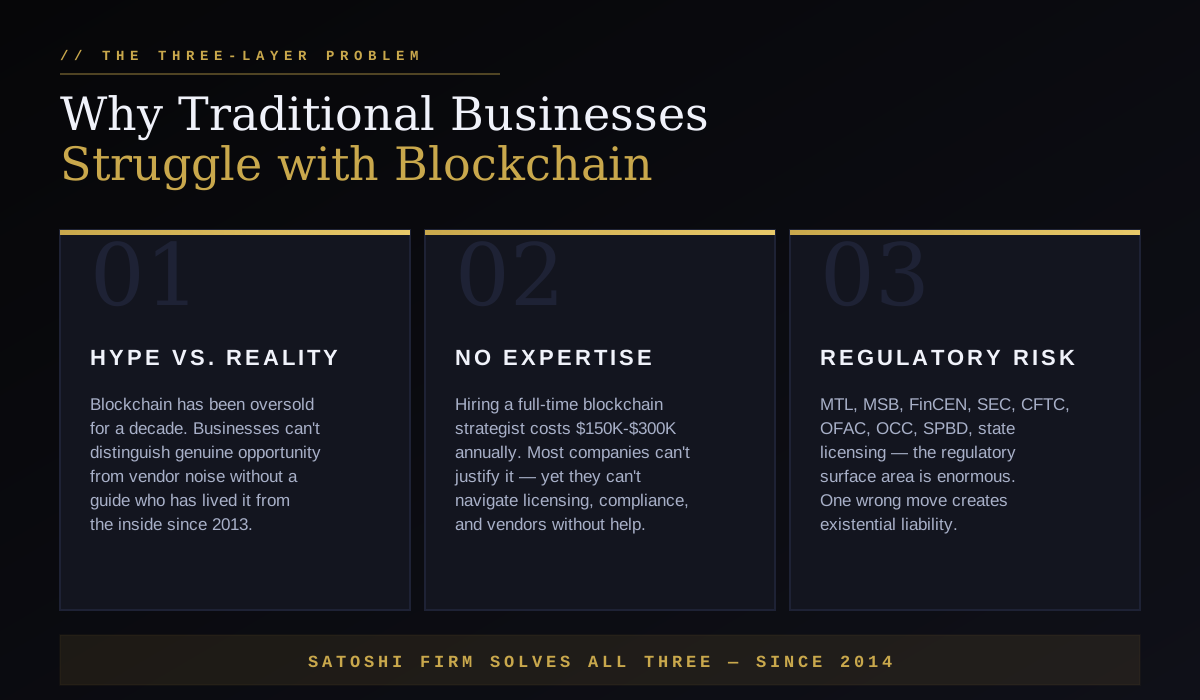
Every board is hearing the same question. Very few have anyone in the room who can answer it honestly — without a vendor agenda, a conflict of interest, or a knowledge gap.
Blockchain has been oversold for a decade. Most businesses can't distinguish genuine operational opportunity from noise. Without a guide who has lived it from the inside since 2013, the cost of the wrong decision compounds every quarter.
Hiring a full-time blockchain strategist costs $150K–$300K annually. Most mid-market companies can't justify it yet — but they can't afford to navigate licensing, compliance, and vendor selection without someone who knows the landscape.
MTL requirements, MSB registration, FinCEN BSA obligations, state money transmission rules, SEC token classification, CFTC jurisdiction, SPBD pathways — the regulatory surface area is enormous. One wrong move is existential.
Not generalist advice dressed up with blockchain vocabulary. Operational knowledge built from 12 years of direct participation across every market cycle — from the 2013 genesis era through today's institutional adoption.
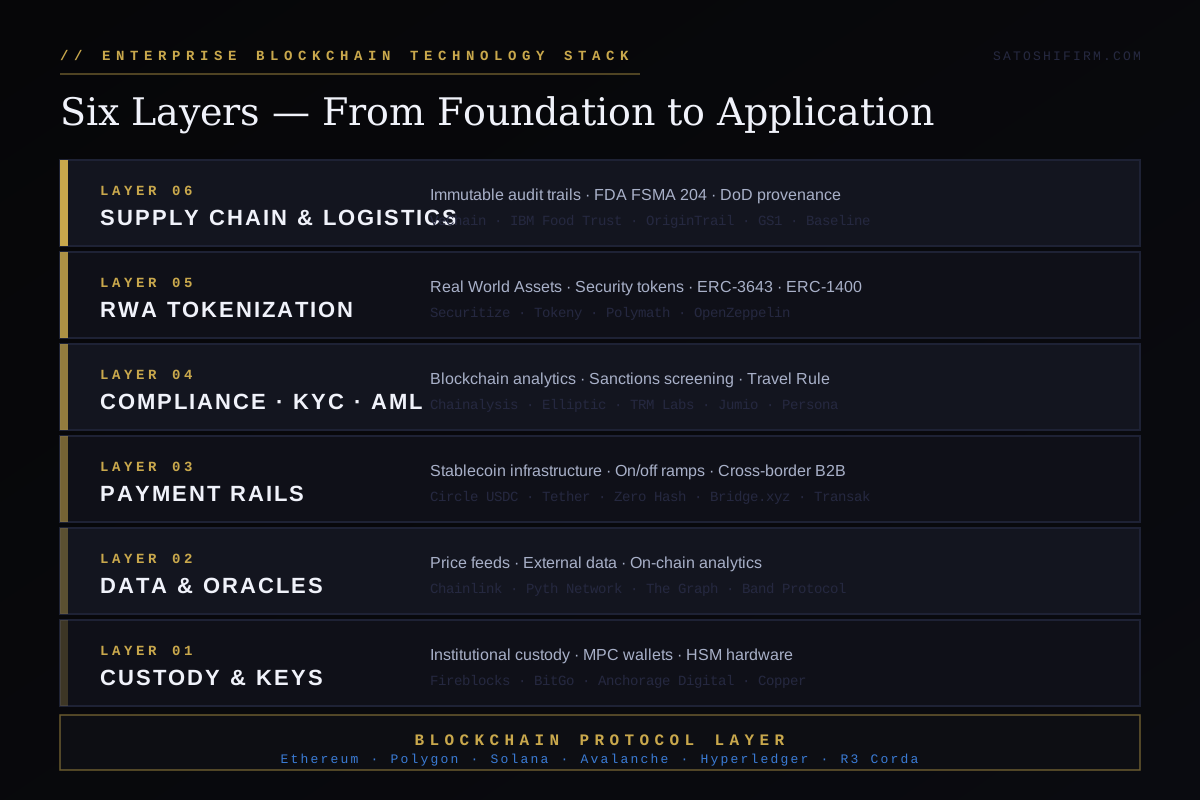
Understanding which blockchain stack is right for your specific use case is not a simple question. Layer 1 networks offer maximum decentralization. Layer 2 solutions deliver throughput and cost efficiency. Private chains give enterprises control over data access without sacrificing auditability. The wrong choice creates technical debt that is expensive to unwind. Satoshi Firm evaluates your transaction volume, counterparty trust requirements, regulatory posture, and integration complexity — then maps the right architecture before a single vendor is engaged.
Money Transmitter Licenses are required in most states for any business transmitting value — including stablecoin flows, crypto payment acceptance, and certain DeFi interactions. MSB registration with FinCEN carries BSA obligations including AML programs, SAR filing, and CTR requirements. We navigate which licenses apply, which states require them, and how to structure operations to minimize compliance surface area.
Stablecoin and crypto payment rails are now operationally viable for B2B and increasingly B2C. USDC, USDT, and emerging CBDC infrastructure offer settlement finality, programmable payment logic, and cross-border efficiency that legacy rails cannot match. We evaluate processor options, on/off-ramp providers, custodial vs non-custodial flows, and merchant integration — then map the right stack to your revenue model.
Real World Asset tokenization is the most significant enterprise blockchain opportunity in the current cycle. Tokenizing receivables, real estate, commodities, carbon credits, or supply chain assets creates liquidity, programmability, and auditability that traditional instruments cannot provide. Architecture must account for legal wrapper structure, token standard selection, transfer restriction enforcement, and SPBD compliance pathways.
Blockchain-based supply chain infrastructure creates tamper-evident audit trails from source to destination. FDA FSMA 204 food traceability mandates, DoD CMMC supply chain integrity requirements, and ESG disclosure obligations are all driving adoption. Implementation spans public chains, private consortiums, and hybrid architectures depending on counterparty relationships and data sensitivity.
Decentralized finance protocols now manage hundreds of billions in value. For enterprises considering DeFi integration — treasury management, yield strategies, liquidity provision, or protocol-level partnerships — we provide clear-eyed analysis of smart contract risk, regulatory exposure, counterparty considerations, and operational implementation requirements.
The vendor and protocol landscape is vast, fast-moving, and full of conflicts of interest. Satoshi Firm is vendor-agnostic. We evaluate your requirements first — then recommend the right infrastructure.
Institutional-grade custody is the foundation of any enterprise crypto program. Options span qualified custodians, self-custody with HSM hardware, MPC key management, and hybrid models. The wrong custody architecture creates regulatory exposure or operational risk — both costly.
Smart contracts require external data — price feeds, compliance triggers, supply chain events, KYC verification. Oracle networks bridge real-world data to on-chain logic, determining the security of your entire contract system.
Stablecoin payment rails offer T+0 settlement, programmable payment logic, and cross-border efficiency that ACH and wire infrastructure cannot match. Stack selection depends on counterparty geography, regulatory jurisdiction, and volume.
Blockchain analytics, on-chain KYC, sanctions screening, and transaction monitoring platforms enable compliant digital asset operations at scale. Selection depends on counterparty risk profile and regulatory obligations including Travel Rule compliance.
Tokenizing real-world assets requires legal wrapper structure, token standard selection (ERC-3643, ERC-1400), transfer restriction enforcement, and SPBD compliance pathway planning for security token structures.
The application layer is where blockchain becomes visible to your customers, regulators, and counterparties. Supply chain traceability, trade finance automation, cross-border payment execution, and compliance reporting all live here. Implementation requires integration with existing ERP, WMS, and TMS systems.
Satoshi Firm is vendor-agnostic by policy. Every technology recommendation comes with a written rationale — and we receive no referral fees from any vendor.
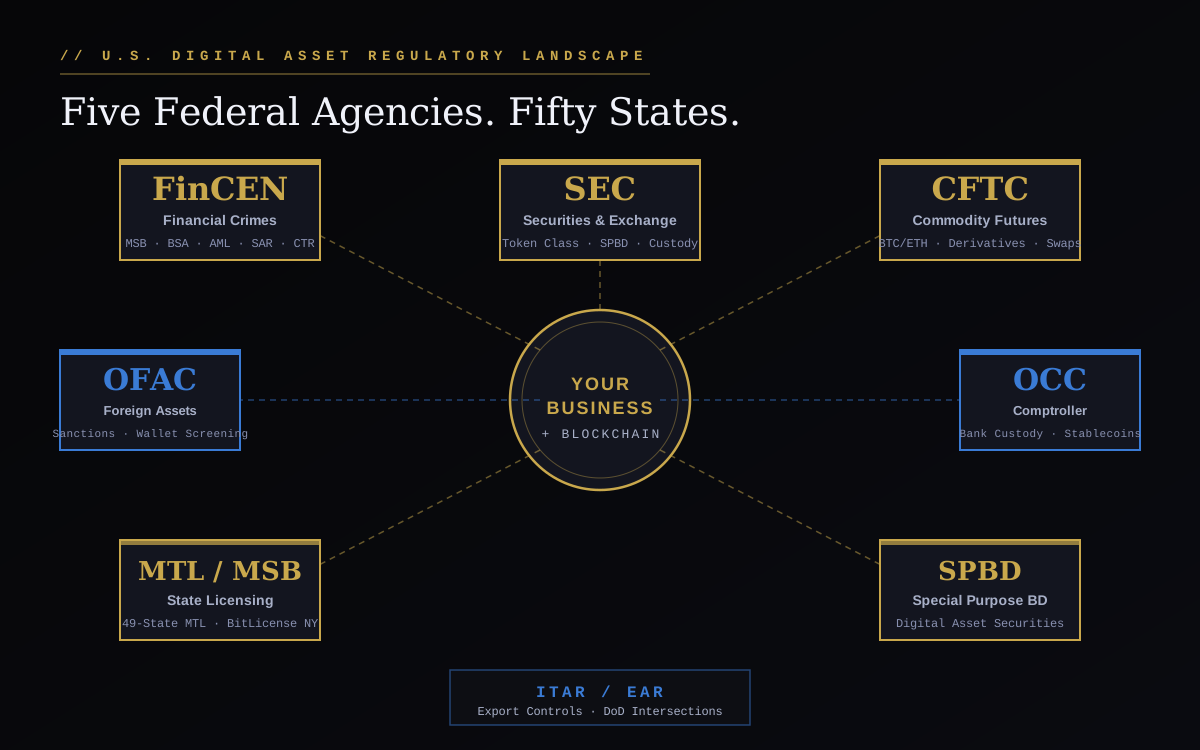
The regulatory surface area for blockchain spans five federal agencies, 50 state licensing regimes, and multiple international frameworks. Getting this wrong is not a fine — it is an existential event.
Token classification, securities offering compliance, Howey Test analysis, custody rules for investment advisors, broker-dealer registration thresholds, and the SPBD special purpose framework for digital asset securities.
Commodity classification of Bitcoin and Ether, derivatives and futures jurisdiction, swap dealer registration requirements, and oversight of digital asset trading platform structures.
MSB registration requirements, Bank Secrecy Act obligations, AML/KYC program design, suspicious activity reporting (SAR), and Travel Rule compliance for digital asset transfers.
National bank crypto custody guidance, stablecoin reserve requirements, fintech charter considerations, and bank partnership compliance for crypto-enabled financial products.
Sanctions compliance for digital asset transactions, wallet address screening requirements, blocked person protocols, and cross-border payment filtering for crypto and stablecoin rails.
The SEC's Special Purpose Broker-Dealer framework allows registered entities to custody digital asset securities under modified net capital rules. For companies building tokenized asset platforms, RWA infrastructure, or security token exchanges, understanding the SPBD pathway — its capital requirements, operational constraints, and competitive advantages — is essential strategic knowledge. Satoshi Firm guides companies through SPBD analysis and connects them with the legal infrastructure required.
State-Level Compliance
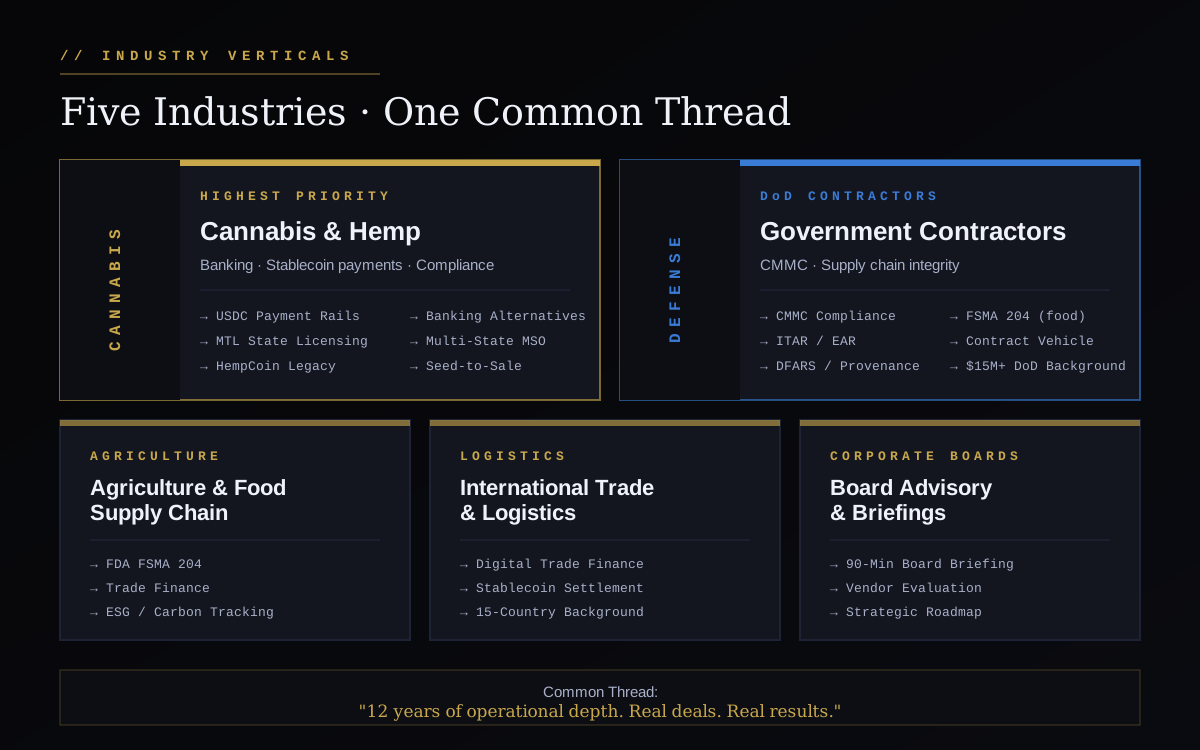
Deep domain knowledge in the sectors where blockchain creates the most immediate, measurable business value — with direct operational experience in each.
The cannabis industry operates with a fundamental banking infrastructure problem that blockchain directly solves. Federal restrictions leave most operators managing cash, paying premium fees for limited processing, and exposed to theft and compliance risk. Stablecoin payment infrastructure, combined with proper state licensing, eliminates cash dependency. Satoshi Firm has been engaged with cannabis-adjacent blockchain since 2013 — including founding HempCoin (THC), one of the first cannabis-focused blockchain projects ever built.
Satoshi Firm advises private companies that already hold government contracts and need to add blockchain capability to satisfy federal requirements or win their next option year. CMMC 2.0 supply chain integrity, FSMA 204 traceability, and DoD provenance requirements are appearing in contract language across defense, food service, and logistics. We are not pursuing federal contracts ourselves — we are the blockchain expert these contractors bring in to fulfill their existing obligations. With $15M+ in closed DoD contract experience and direct Lockheed Martin / NASA MSFC background, we speak the language of federal procurement.
FDA FSMA Section 204 mandates electronic traceability records for high-risk foods. Blockchain provides the tamper-evident audit trail that satisfies FDA requirements while enabling real-time contamination recall response and consumer-facing provenance. For agricultural cooperatives and exporters, stablecoin payment rails solve the cross-border payment problem that has plagued commodity trade for decades.
International logistics involves dozens of counterparties, multiple currencies, paper-based documentation, and settlement delays that impose enormous costs. Blockchain-based trade finance, smart contract-enabled freight payments, and digital bill of lading infrastructure are transforming the sector. Tim's AutoVid export business operated across 15+ countries — direct experience with international payment friction informs every logistics recommendation.
For companies where the board is asking about blockchain but nobody in the room has operational answers, Satoshi Firm provides a Board Blockchain Briefing — a 90-minute executive session that cuts through the noise. No vendor pitches. No hype. A direct assessment of what blockchain means for your specific industry, what your competitors are doing, and what decisions need to be made now.
A 90-minute executive session that cuts through 10 years of hype and tells your leadership team exactly what is real, what is relevant to your business, and what decisions need to be made. Polished presentation with a one-page decision framework leave-behind. Available virtually or in person.
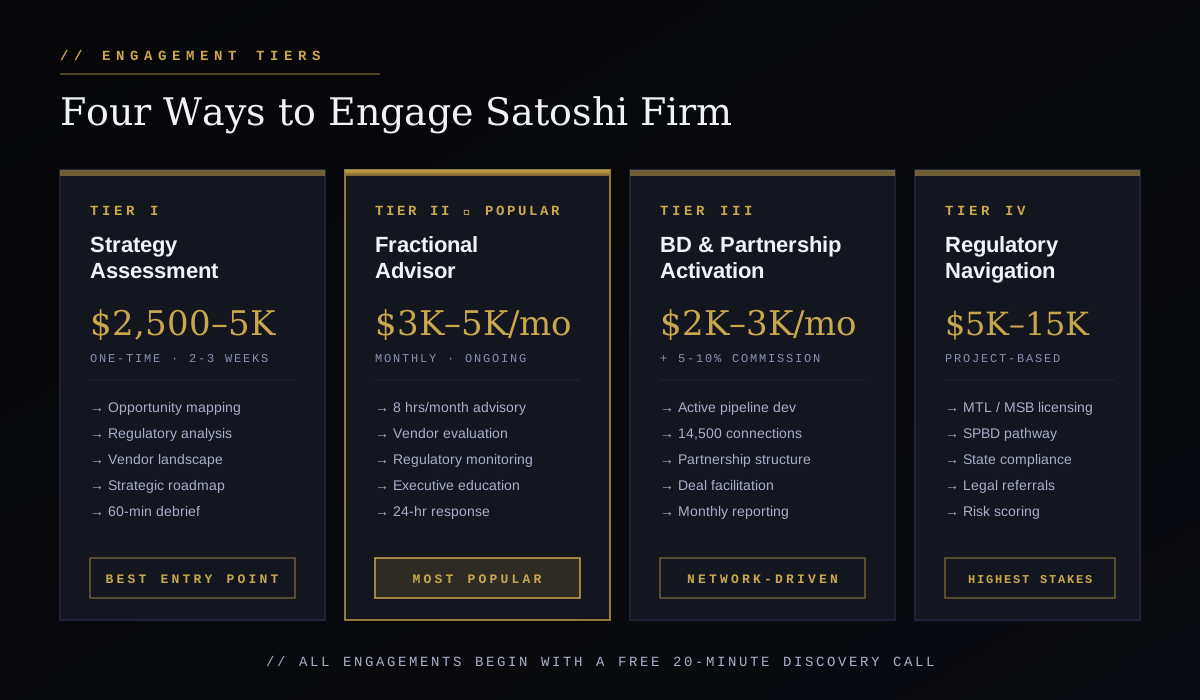
Four engagement models designed to meet you where you are — from initial assessment to fractional advisory and active business development. Engagements typically range from $2,500 for assessments to $5,000/month for ongoing advisory.
A focused, written strategic assessment of your blockchain opportunity landscape. We review your business model, identify use cases with the highest ROI, flag regulatory considerations, and deliver a prioritized roadmap with vendor recommendations.
Ongoing monthly advisory. Tim serves as your internal blockchain expert — attending key meetings, evaluating vendors, advising on partnerships, monitoring regulatory developments without the cost of a full-time hire.
For clients building crypto or blockchain revenue streams — Tim actively works your pipeline using a 14,500-connection network. Introductions, partnership structuring, deal facilitation. Commission aligns incentives.
Helping businesses understand how SEC, CFTC, FinCEN, and state regulations apply to their specific situation. We translate regulatory complexity into business decisions — and connect you with the right legal counsel.
Satoshi Firm doesn't stop at strategy. We are directly connected to the top blockchain and digital asset attorneys in the country — covering every legal structure, obstacle, and jurisdiction your business will encounter.
Most consultants hand you a strategy and leave you to figure out the legal execution yourself. Satoshi Firm is different. Through direct relationships cultivated across 12 years inside the blockchain industry, we maintain active connections with the leading blockchain and digital asset legal practices — covering securities law, money transmission, smart contract structure, tokenization, DAO formation, international regulatory frameworks, and litigation defense.
When your business needs legal counsel, we don't hand you a directory. We make the introduction, brief the attorney on your situation, and stay engaged through the legal process — ensuring strategy and legal execution move in the same direction.
Token classification, securities offering compliance, Regulation D and Regulation A+ structures, SAFTs, and investment contract analysis. Connected to attorneys who have represented issuers, exchanges, and institutional investors in SEC and CFTC proceedings.
State-by-state money transmitter applications, FinCEN MSB registration, BitLicense preparation, BSA/AML program drafting, and regulatory examination defense. Connected to attorneys who have successfully licensed crypto businesses in all 50 states.
Legal structuring for tokenized assets, DAO formation and governance documents, smart contract legal wrappers, DeFi protocol compliance, and NFT and digital asset ownership frameworks. The law around on-chain structures is still forming — our attorneys are writing it.
EU MiCA compliance, FATF Travel Rule implementation, offshore structure formation for crypto businesses, cross-border payment legal frameworks, and international exchange licensing. Essential for businesses operating across multiple jurisdictions.
When regulators come knocking, you need attorneys who have been inside these proceedings. Connected to firms with active experience defending blockchain companies in SEC, CFTC, DOJ, and state attorney general actions — and winning.
Optimal entity formation for crypto and blockchain businesses, advisor and employment agreements for token-compensated teams, IP protection for protocol and technology assets, and commercial contracts for blockchain service providers.
In an industry full of people who claim expertise they don't have, every credential Satoshi Firm presents is verifiable on the public record — on-chain, in court filings, in government contract databases, and in exchange histories.
"In an industry where credentials are easy to claim and hard to verify, Satoshi Firm stands on a public record. Blockchain transactions don't lie. Government contract databases don't lie. Exchange histories don't lie. Our track record existed before this website did."
Most crypto consultants are either technically deep but commercially inexperienced — they understand protocols but have never closed a $10M deal or run an international operation. Or they are generalist business consultants who learned crypto recently — they understand enterprise sales but lack the operational depth to evaluate a vendor's technical claims or a token's regulatory exposure.
Tim is neither. He launched a blockchain in 2013 before Ethereum existed. He watched every market cycle from the inside — the 2017 ICO explosion, the 2018 collapse, DeFi summer, the NFT era, the 2022 implosion, and the institutional adoption phase now underway. And he built businesses, closed government contracts, and sold complex solutions across 15+ countries. That combination does not exist elsewhere in this market.
From first conversation to strategic execution — a structured process that delivers clarity fast, with no surprises on scope or cost.
20-minute free call. We identify your specific situation, pain points, and objectives. No pitch — just diagnosis.
Written scope delivered within 48 hours. Clear deliverables, fixed timeline, and firm pricing. No surprises.
We go deep on your industry, regulatory exposure, and the vendor landscape relevant to your use case.
Written roadmap, vendor recommendations, regulatory analysis, and implementation priorities — delivered and walked through.
Most clients convert to monthly retainer. We stay engaged as your internal expert through implementation.
Schedule a free 20-minute discovery call. No pitch, no pressure. We'll tell you honestly whether we can help — and exactly how.